

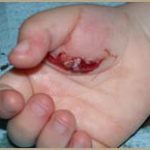
Compartment syndrome is a serious condition that occurs when there is an increase in pressure within a muscle compartment or lodge. Lodges are the collections of muscle tissue, blood vessels and nerves in the arms and legs. Each lodge is surrounded and supported by thick tissue called aponeurosis. Since the aponeurosis is not stretchable, when there is swelling in a lodge, it causes pressure against the structures inside the lodge. Eventually, blood circulation is impaired. This disrupts the function and viability of the tissues contained within the compartment. Lesions associated with compartment syndrome mainly affect muscles and nerves.
TYPES OF LODGE SYNDROME
Acute compartment syndrome corresponds to the acute symptoms caused by a sudden increase in intramuscular pressure. This leads to a reduction in tissue vascularization and muscle suffering. Ultimately, this can lead to edema, which reduces the arterial blood supply to an organ.
Acute loge syndrome can develop :
- following a fracture
- following an injury that crushes the limb
- following a severe muscular hematoma
- following wearing a cast or tight bandage
- following excessive consumption of alcohol or drugs
- following electrification (serious forms)
When tissue pressure reaches the 30 mmHg threshold, critical vessel closure pressure is reached, and muscle perfusion is interrupted, causing tissue ischemia. This ischemia may be exacerbated by a decrease in the arteriovenous gradient due to increased venous pressure resulting from impeded venolymphatic return, caused by hyperpressure. This self-aggravating cascade of hyperpressure-edema-ischemia leads to pain. Pain may be due either to muscular ischemia, or to compression of sensory nerve endings by edema. As ischemia is located at the microcirculatory level, distal pulses are always preserved, even in the presence of an acute syndrome. This phenomenon mainly affects the flexor loge. In order of frequency, it affects the leg, then the forearm, arm, thigh, buttock and deltoid.
The pain associated with compartment syndrome is :
- Very intense, even disproportionate to the causal mechanism, – located in the injured area, – in the form of tension and cramp, – resistant to analgesics and changes in position, – exacerbated when the muscles in the affected area are tightened and during passive mobilization. Pain characteristics
Surgical management :
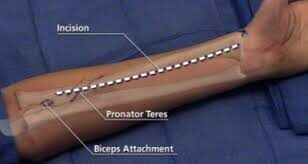
Forearm: In principle, decompression of the volar/palmar compartment via the Henry approach is sufficient to decompress the other two compartments, unless the compartment syndrome is very severe, in which case a dorsal incision and carpal tunnel incision must be added.
Volkmann syndrome is the late manifestation of ischemic sequelae leading to permanent retraction of forearm muscles. Chronic loge syndrome corresponds to the temporary and reversible manifestations linked to this increase in intramuscular pressure. It occurs mainly in athletes. Muscle volume can increase by up to 30% during physiological effort, leading to content-content conflict in some subjects.