Rhinoplasty is a surgical procedure designed to change the shape of the nose. This awkward shape may be congenital or the result of trauma. It is an aesthetic procedure often performed to improve the appearance of the nose, but it can also be performed to correct functional problems such as breathing difficulties. Here are some key points to know about rhinoplasty:
Aesthetic objectives: People generally opt for rhinoplasty to correct aspects such as the size, shape, angle or proportions of the nose in relation to the rest of the face. Corrections may include tightening the tip (in the case of a bulging or drooping tip), smoothing the dorsal hump, or modifying the nostrils (in the case of excessive nostril width).
Functional objectives: In addition to aesthetic improvements, rhinoplasty can also be performed to resolve functional problems such as breathing difficulties caused by a deviated septum, in which case an associated septoplasty is also performed, or other structural problems.
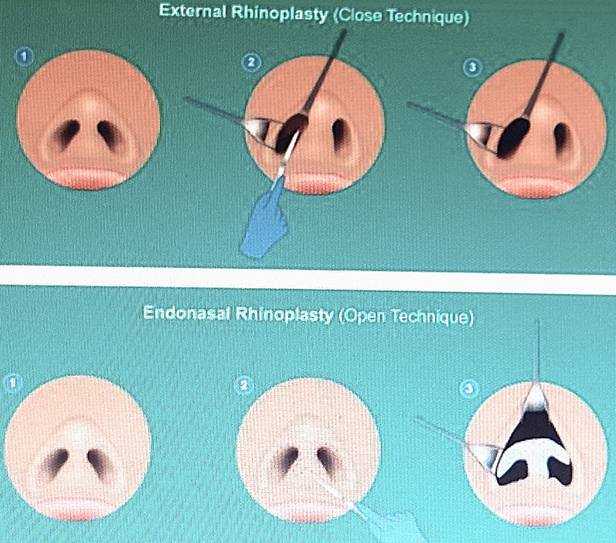
Procedure: Rhinoplasty can be performed either open or closed. In open rhinoplasty, the surgeon makes an external incision through the columella (the fleshy, cartilaginous part between the nostrils), while in closed rhinoplasty, incisions are made inside the nose. The choice between these approaches depends on the complexity of the operation.
The procedure lasts on average 1H30 to 2H30, and the hospital stay is one to two days.