
Brachioplasty is a surgical procedure also known as an “arm lift” or “brachial lift.” This procedure is done to reshape the arm area by removing excess skin and, in some cases, fat. The most common reasons people choose brachioplasty include significant weight loss, slack skin due to aging, or other genetic factors. It is done under general anesthesia and lasts an average of 1 hour to 2 hours, with hospitalization lasting 24 to 48 hours. A 5-day stay in Tunisia. This type of surgery may be combined with other silhouette surgery.
There are 3 types of surgery with scars that vary depending on the surgical indication.
- Horizontal scar brachioplasty hidden in the armpit to treat moderate excess skin-fat in the upper third of the arm if only the upper third is affected.
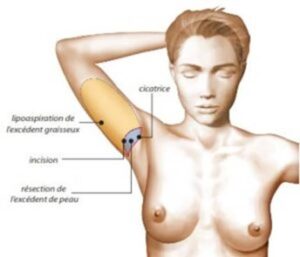
- Brachioplasty with longitudinal scar on the inner and lower arm. Its length varies according to the amount of skin to be removed. This technique is indicated for large amounts of excess skin that affect the entire arm. In this case, the duration of the intervention can be up to 1 h 30, including liposuction of the arms. The scar left will remain little visible and perfectly concealed when the arms are located along the body.
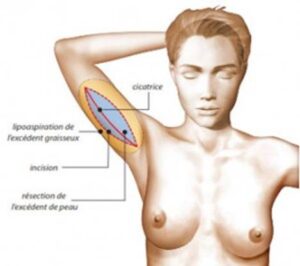
- Double scar brachioplasty (horizontal and longitudinal), which combines the previous two and is often indicated for treatment of excess skin-fat that affects the entire arm.
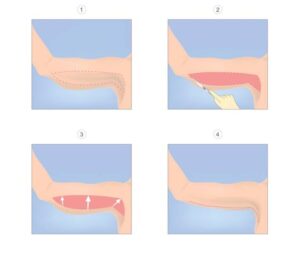
This is how brachioplasty usually works:
- Consultation: Before surgery, the patient consults the plastic surgeon to discuss goals, review health, and discuss surgical options.
- Anesthesia: Brachioplasty is usually done under general anesthesia to ensure patient comfort during the procedure.
- Incision: Brachioplasty is usually preceded by liposuction, and then the surgeon makes an incision, usually in the crook of the armpit or along the inferior-medial side of the arm, from the armpit to the elbow. The length of the incision depends on the amount of skin to be removed.
- Removal of excess skin and fat: Once the incision is made, the surgeon removes the excess skin.
- Closure of incisions: After removing excess tissue, the surgeon closes the incisions with sutures.
- Recovery period: After surgery, the patient can expect a variable recovery period during which the surgeon’s recommendations for postoperative care and restraint, restricted physical activity, and medical follow-up should be followed.